
Length of pasture rotations
Below is the output from a RIM run we developed here at AHRI to demonstrate how the Ryegrass Integrated Management (RIM) computer model can be used to put theories to the test.
by Peter Newman
This rotation was suggested by Phil Barrett-Lennard who is an agricultural consultant and beef producer in W.A. Phil thought that it was about time we had a look at the impact of a pasture phase in the rotation. For these runs we compare different length pasture phases.
Let’s set it up
- Mixed farm in medium to high rainfall zone of W.A.
- All of the herbicides are still working
- Clover pasture, grazed and spray topped in spring followed by Canola : Wheat : Barley rotation.
We are looking to answer the questions
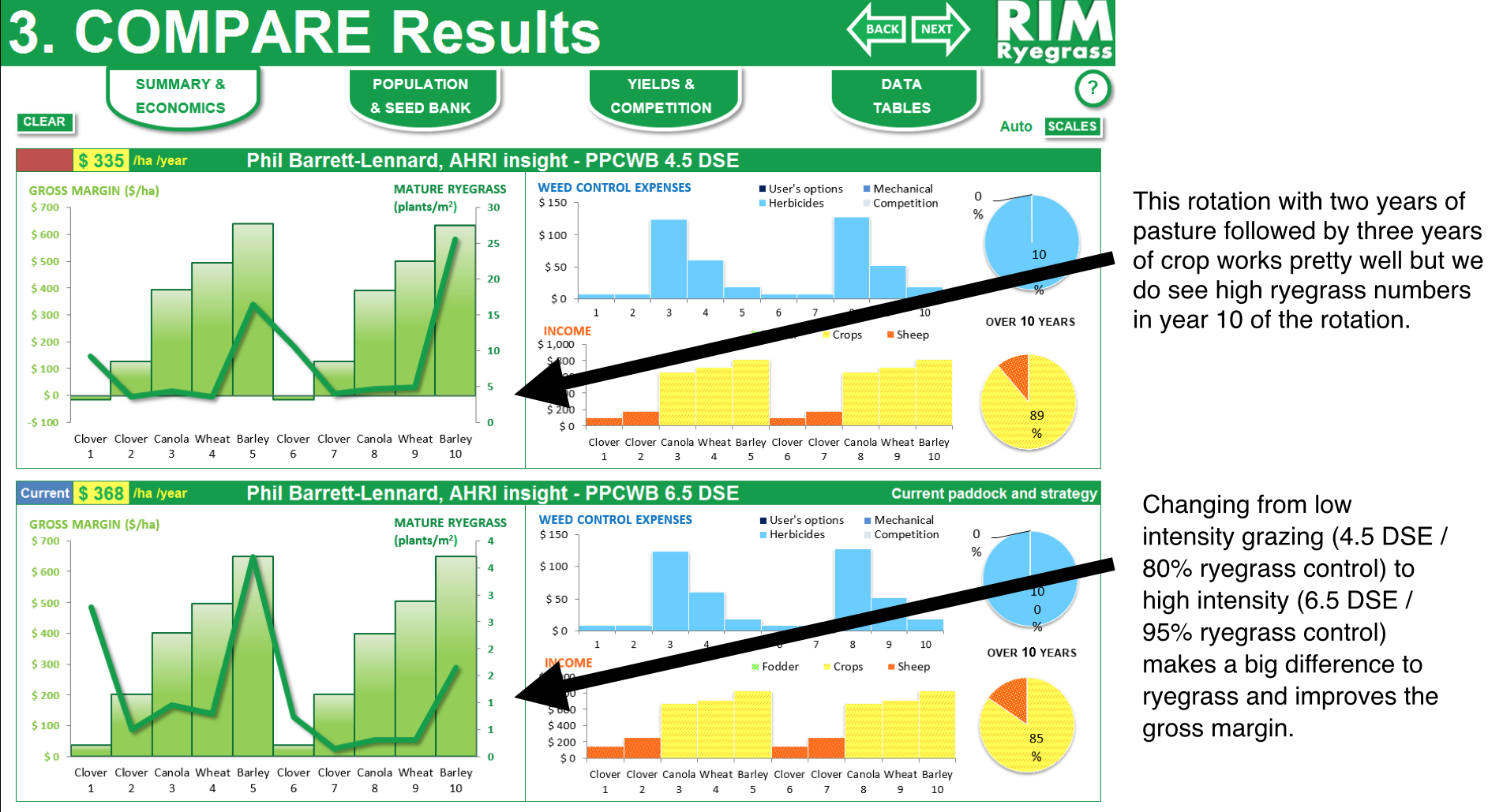
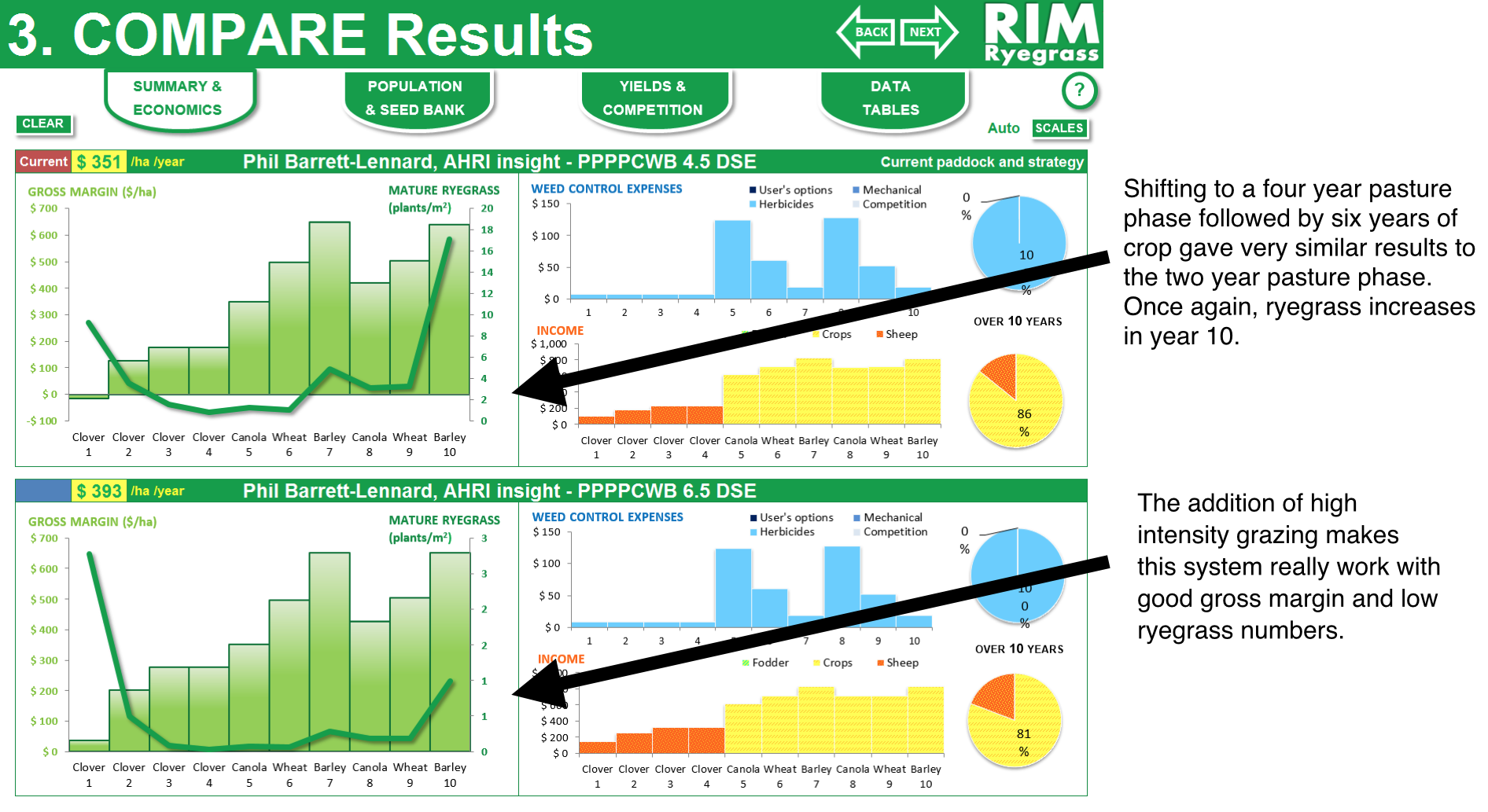
- Is it better to have two years of pasture then three years of crop or four years of pasture then six years of crop?
- What management is required to keep the system working
PPCWB low intensity grazing (4.5 DSE/ha) v high intensity (6.5 DSE/ha)
PPPPCWBCWB low intensity grazing (4.5 DSE/ha) v high intensity (6.5 DSE/ha)
PPCWB plus chaff cart
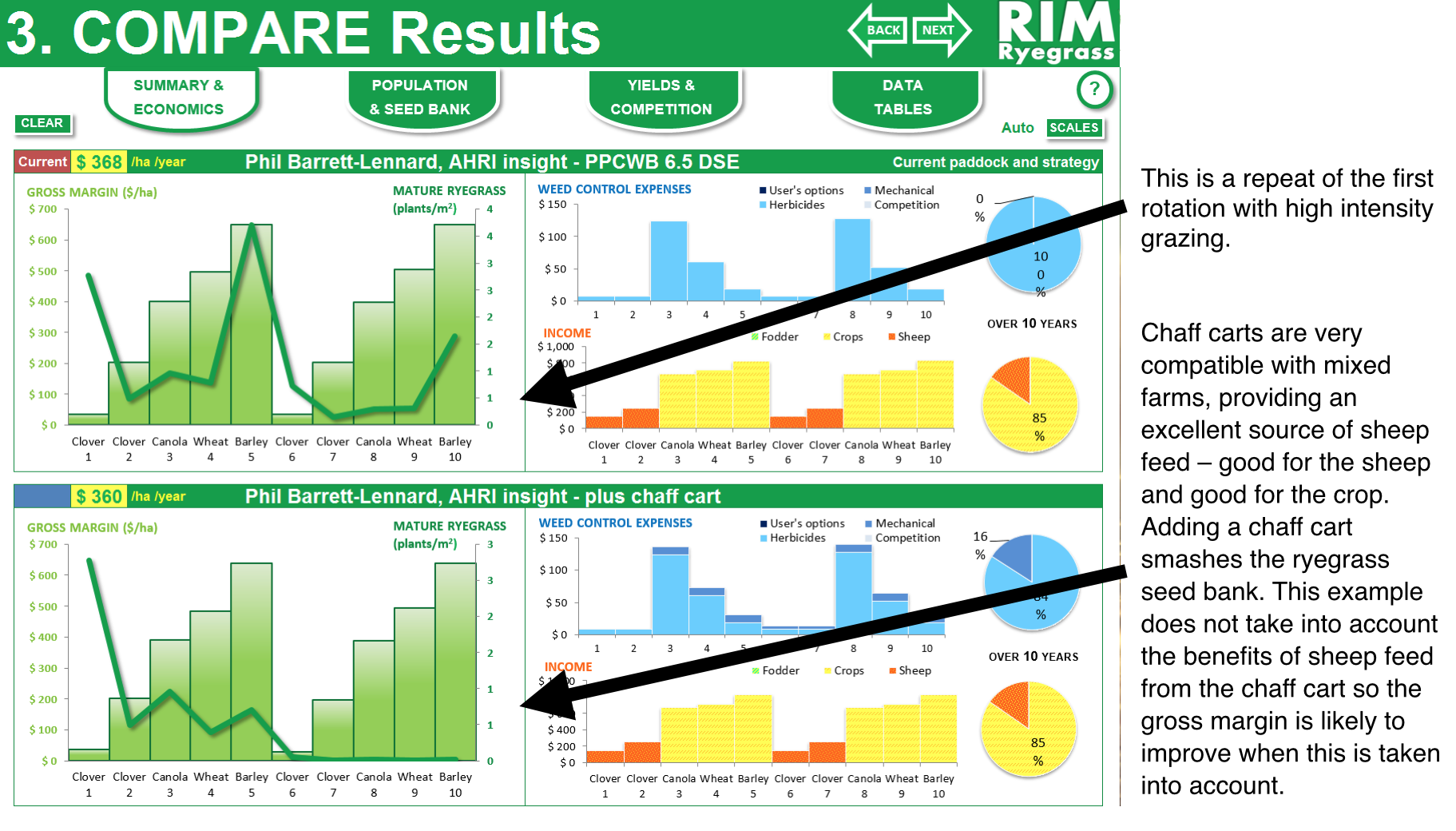
These RIM runs show the benefit of one of the oldest forms of resistant weed management – the pasture phase. Running a seed bank down with a pasture phase followed by a phase of crop is a tried and tested formula for success. The key to making this system work is high intensity grazing to increase the gross margin and the ryegrass control. The addition of a chaff cart to the system may allow for higher stock carrying capacity while eliminating ryegrass. Eliminating ryegrass may not be desirable in this farming system, these growers may choose to put the paddock into crop with no herbicide to increase the ryegrass seed bank!
You can follow Phil on twitter (@pbl1972).
RIM is a great tool to compare some weed control strategies using computer simulation before making the changes on farm. RIM simulates the ryegrass seedbank based on years of research data to give realistic results.
Download RIM for free and give it a try
Assumptions
- Medium to High rainfall zone of Western Australia.
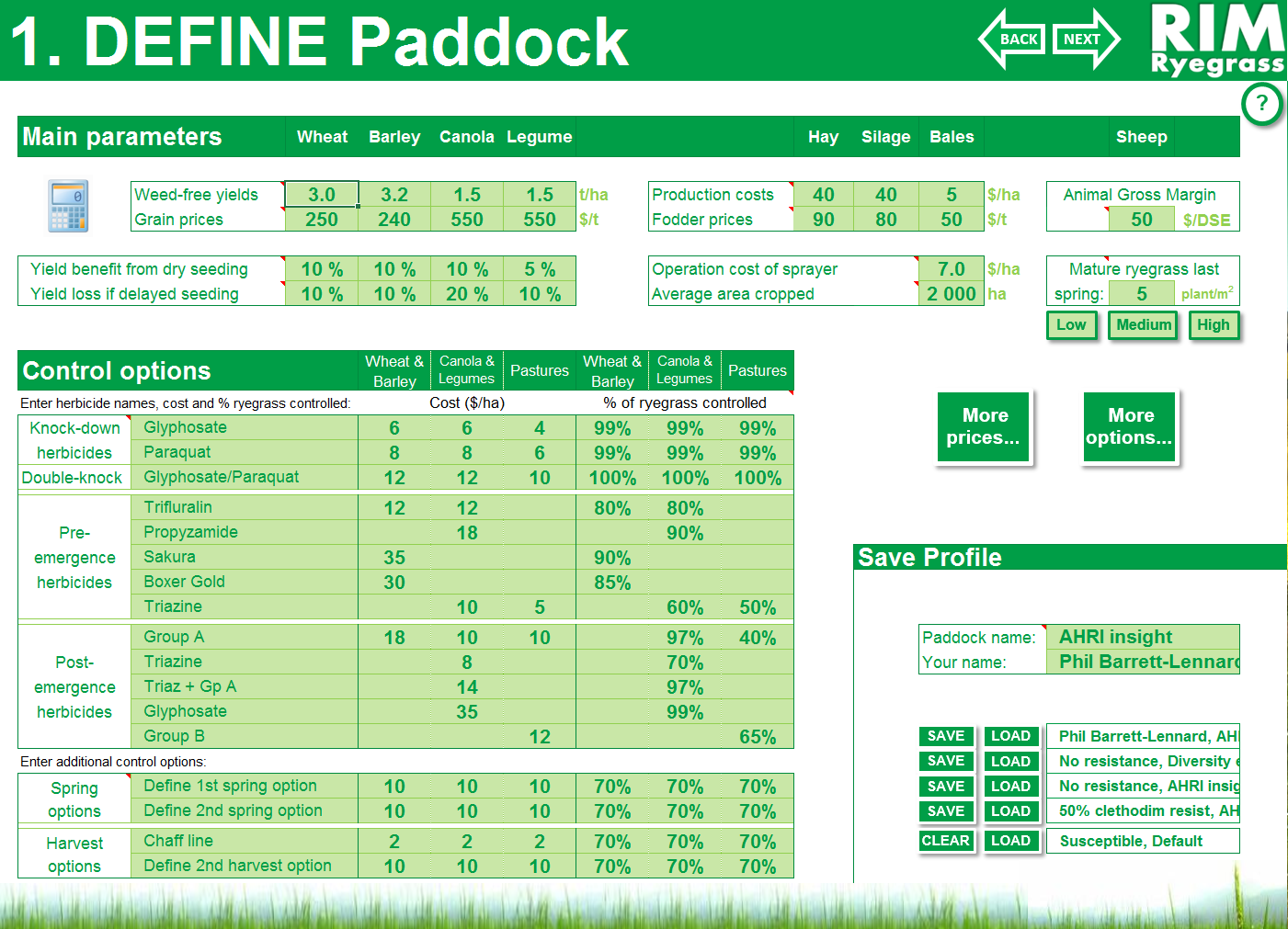
- Herbicide control %. Trifluralin 80%; Propyzamide 90%; Sakura® 90%; Boxer Gold® 85%; Select® 97%; Glyphosate 99%
- Low intensity grazing – 4.5 DSE with 80% ryegrass seed set control
- High intensity grazing – 6.5 DSE with 95% ryegrass seed set control
- Chaff cart – removed 70% of ryegrass seed in crop.
- Spray topping pasture – 90% ryegrass seed set control
- Sheep gross margin – $50/DSE
The picture below shows some of the assumptions used for these scenarios. All of these assumptions can be adjusted to suit a particular farm.