
Have your cake and eat it – do we need a chemical fallow?
Below is the output from a RIM run we developed here at AHRI to demonstrate how the Ryegrass Integrated Management (RIM) computer model can be used to put theories to the test.
Do we need chemical fallow in the rotation to smash the ryegrass seed bank? This was the question posed by a Western Australian agronomist this week.
Let’s set it up:
- Northern cropping zone of Western Australia
- Medium to low rainfall loam
- No resistance to glyphosate or the pre-emergent herbicides
- Should we include chemical fallow, or Roundup Ready Canola, or both?
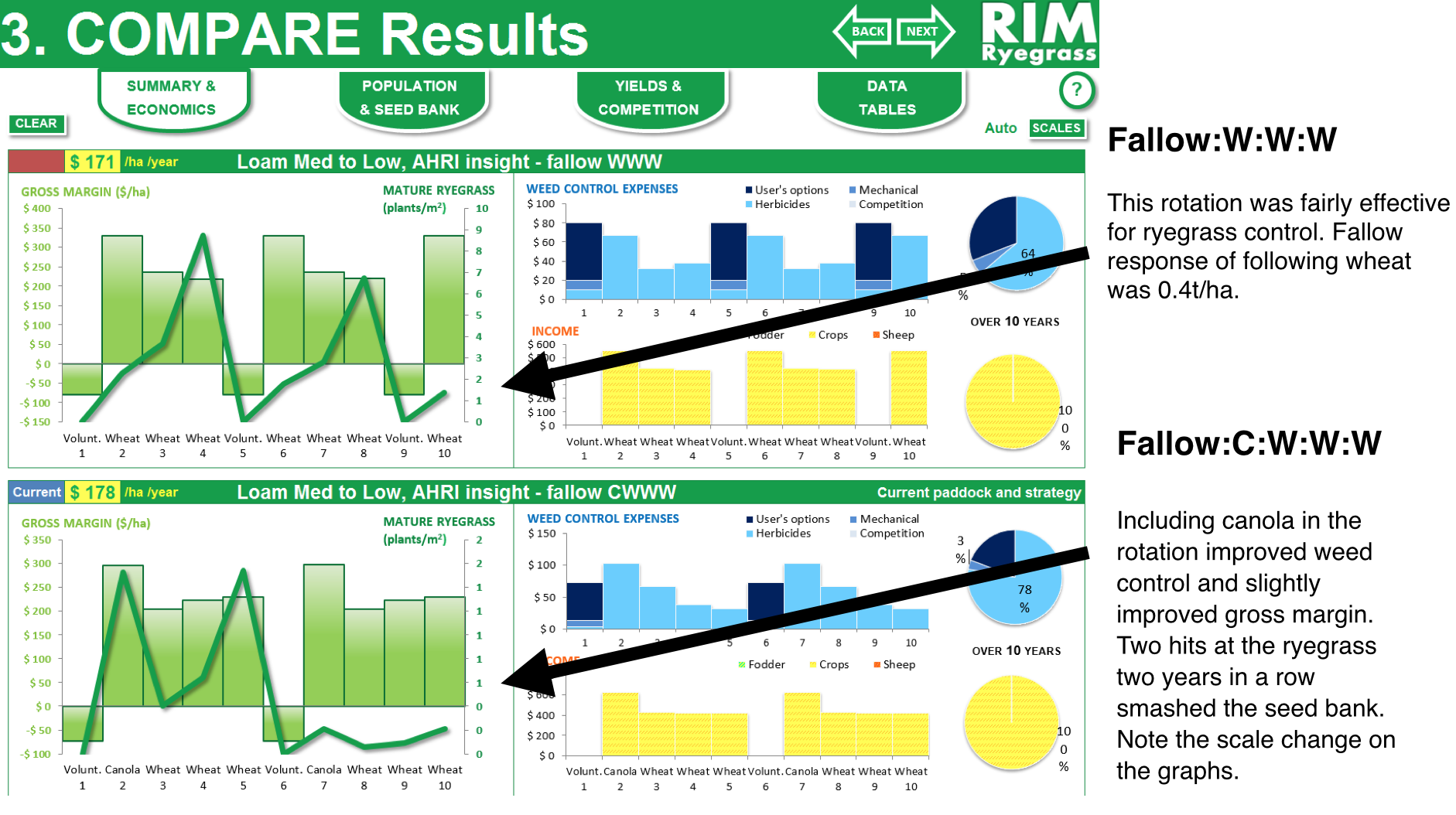
- If we hit the ryegrass hard for two years in a row then use the Rolls Royce ryegrass herbicides in the first wheat crop, can we get the ryegrass seed bank low enough to grow several wheat crops in a row without a blow out?
Fallow:W:W:W v Fallow: Roundup Ready Canola:W:W:W
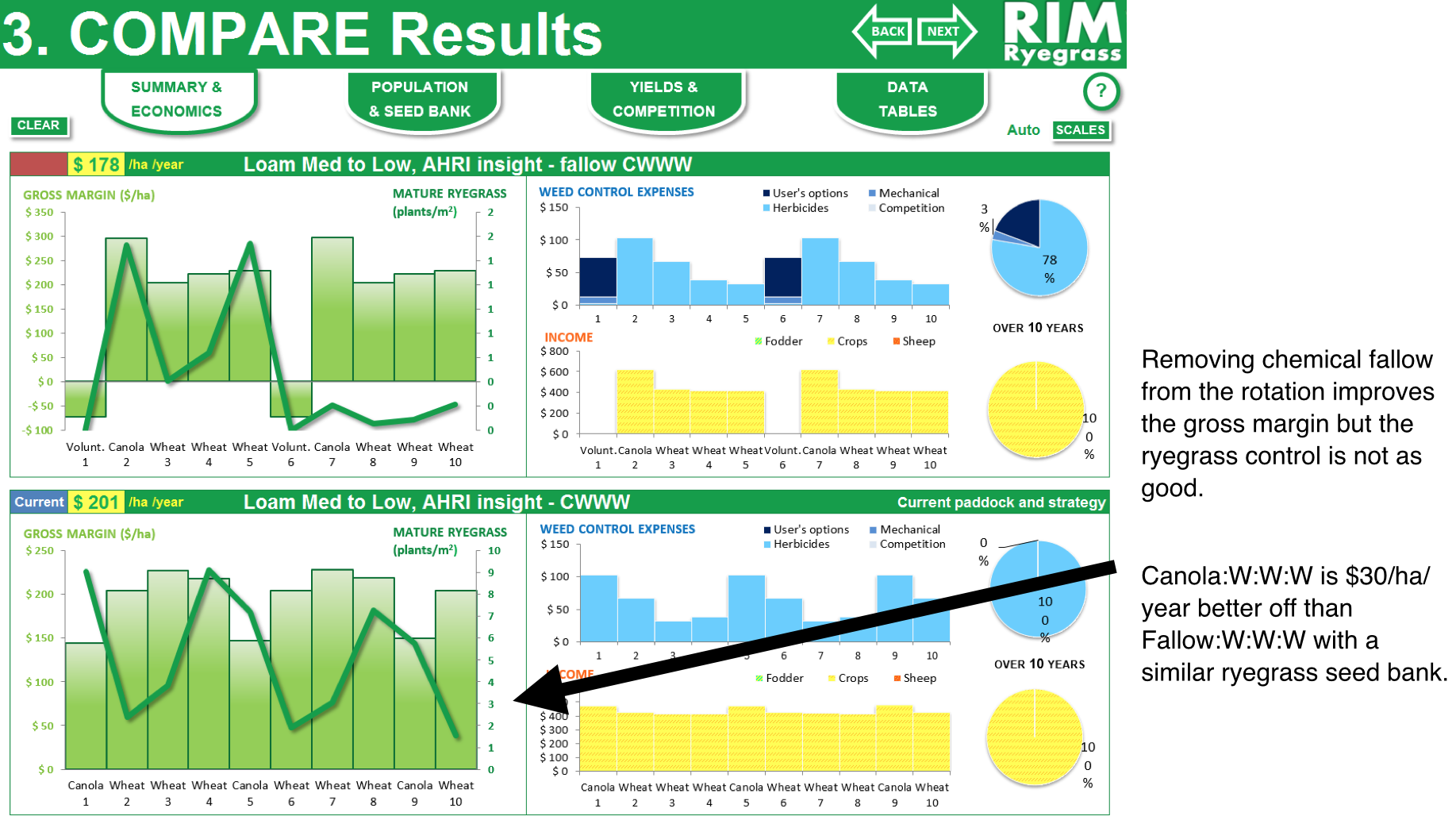
What happens if we remove chemical fallow from the rotation?
Fallow:Canola:W:W:W v Canola:W:W:W
Can we have our cake and eat it? Can we achieve a high gross margin and a low ryegrass seed bank?
Windrow burn canola v windrow burn all crops
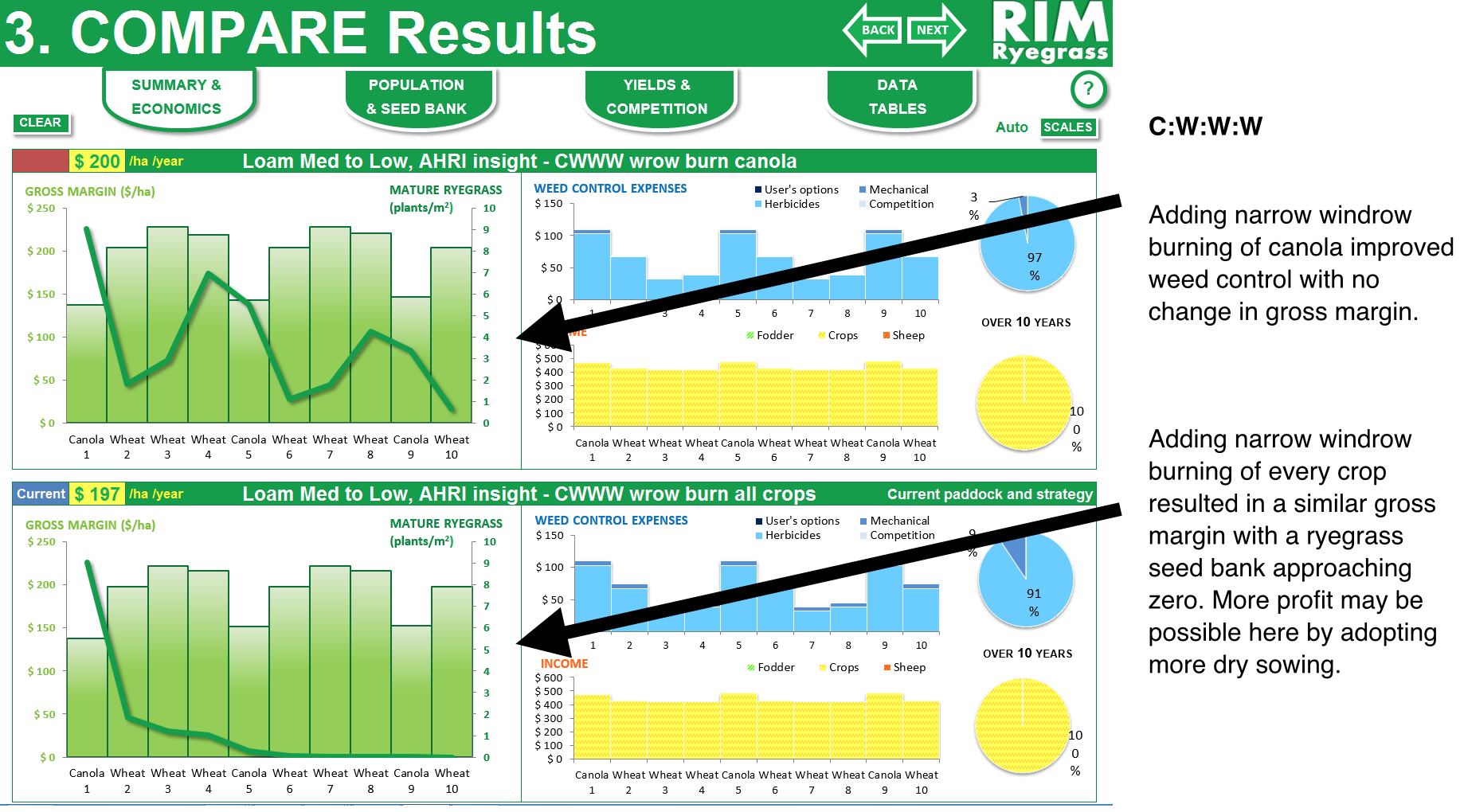
The best application of RIM is to work out how to have your cake and eat it. In other words, how can we maximise profit while minimising weeds. This scenario showed that it is possible to maintain continuous crop and manage weeds.
The profitability of these rotations depends on the wheat yield response to fallow and the ability to grow 0.9t/ha average canola yield in this area. Growers in lower rainfall areas may be more inclined to use chemical fallow as a tool and growers in medium rainfall may be better off with canola in a continuous crop rotation.
Keep in mind that these scenarios assume no herbicide resistance. Glyphosate resistance would be a disaster for these rotations.
RIM is a great tool to compare some weed control strategies using computer simulation before making the changes on farm. RIM simulates the ryegrass seedbank based on years of research data to give realistic results.
Download RIM for free and give it a try.

Assumptions
Some of the assumptions used in this simulation were:
- Loam soil in Medium to Low rainfall zone of northern cropping belt of Western Australia.
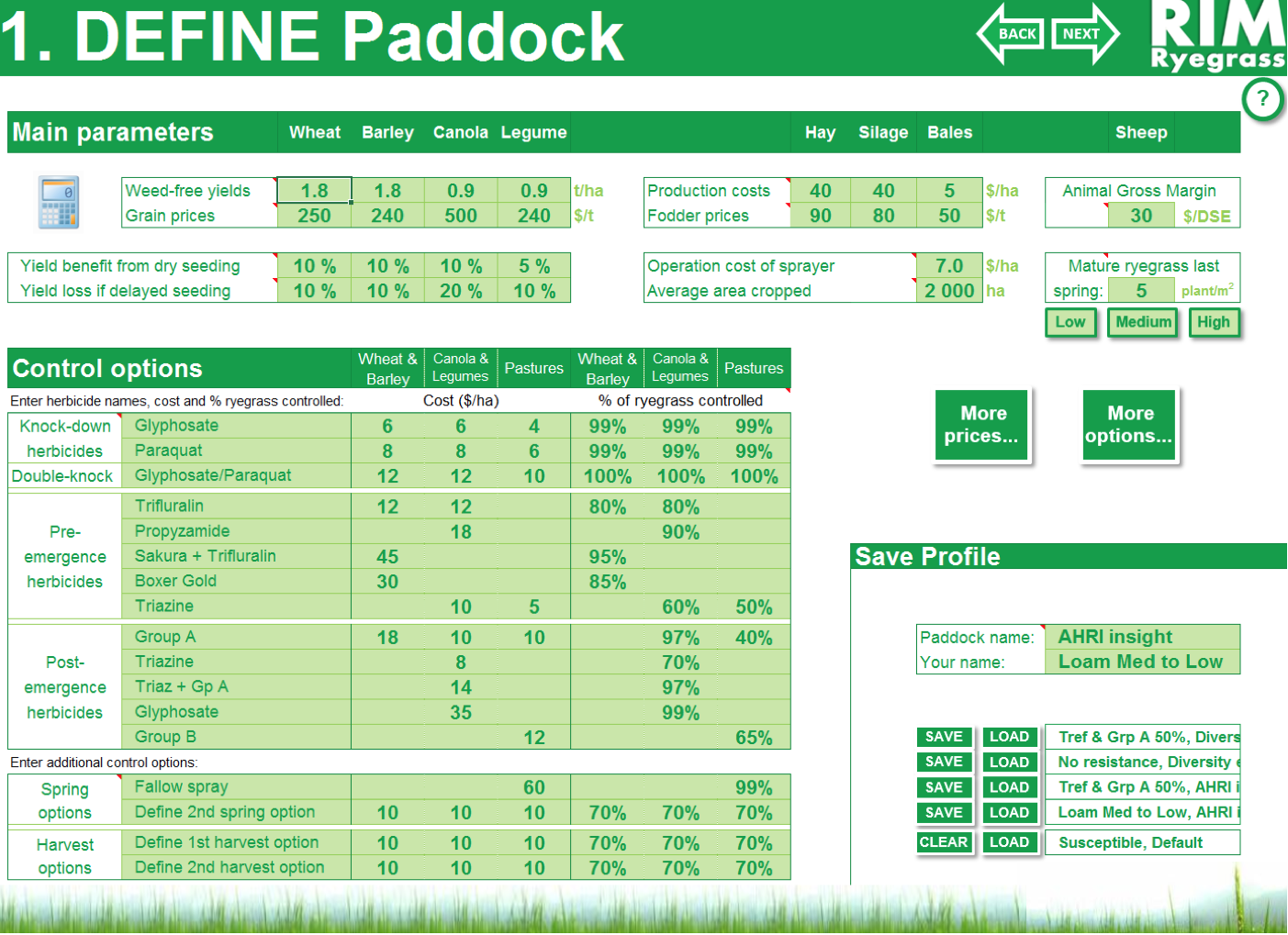
- Yields. Wheat 1.8 t/ha; Canola (Roundup Ready) 0.9 t/ha.
- Costs: Canola seed cost estimated to be $70/ha (this was included in RIM by increasing glyphosate post-em in canola cost). Cost of chemical fallow was $80/ha/year. (this was included in RIM by making a user defined fallow spray option of $60/ha)
- Rotational benefits: Wheat after fallow yield response was 0.4t/ha ($93/ha). Canola after fallow yield response was 0.3t/ha ($164/ha).
- Herbicide control %. Trifluralin 80%; Propyzamide 90%; Sakura + Trifluralin 95%; Glyphosate 99%.
- Windrow burn – removed 70% of ryegrass seed in crop.
The picture below shows some of the assumptions used for these scenarios. All of these assumptions can be adjusted to suit a particular farm.