


2019
Genetic inheritance of dinitroaniline resistance in an annual ryegrass population

The increasing number of weedy species resistant to dinitroaniline herbicides warrants studies on the evolutionary factors contributing to resistance evolution, including genetic inheritance of resistance traits.
In this study, the researchers investigated the genetic control of trifluralin resistance in a well-characterised Lolium rigidum Gaud. (annual ryegrass) population from Western Australia. This population was purified to contain plants homozygous for the Val-202-Phe α-tubulin mutation, and used as the resistant (R) parents and crossed with susceptible (S) parents to produce eight reciprocal F1 families.
Rainfall affects leaching of pre-emergent herbicide from wheat residue into the soil

No-tillage with stubble retention is a widely used cropping system for its conservation and yield benefits. The no-tillage farming system in southern Australia relies heavily on herbicides for weed management, but heavy crop residues may have a negative impact on the activity of pre-emergent herbicides applied.
Metribuzin Resistance in a Wild Radish (Raphanus raphanistrum) Population via Both psbA Gene Mutation and Enhanced Metabolism

This paper identifies multiple mechanisms: as well as psbA gene mutation there is a non-target site resistance mechanism of enhanced metabolism. Of course, we expect multiple mechanisms of herbicide resistance as evident here in both target site psbA gene mutation and non-target site enhanced metabolism resistance.
A novel psbA mutation (Phe274–Val) confers resistance to PSII herbicides in wild radish (Raphanus raphanistrum)
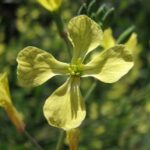
Wild radish (Raphanus raphanistrum) is a globally important weed of crops. Two atrazine-resistant wild radish populations (R1 and R2), collected from the Western Australia grain belt, were investigated for resistance to photosystem II (PSII) herbicides.
1 2