


February 26, 2014
Where were you when you first heard that Princess Dianna had died? Where were you when Glenn McGrath made 50 runs? And, where were you when you first heard that wild radish had evolved resistance to glyphosate? Ok, it’s not quite as big as Glenn McGrath making 50 (he made 61 in fact), but it is big news for Australian agriculture that will cause many of us to re-think how we use glyphosate in the future.
Three glyphosate resistant wild radish populations were discovered by AHRI PhD scholar Mike Ashworth, all were from the northern wheatbelt of WA. Two populations were from winter chemical fallow and one was discovered in a glyphosate tolerant Canola crop.
If there is any good news in this story it is that glyphosate resistant wild radish is still extremely rare. The challenge is to keep it that way. This news will come as no surprise to many, however, glyphosate resistant wild radish is here and we need to take action.
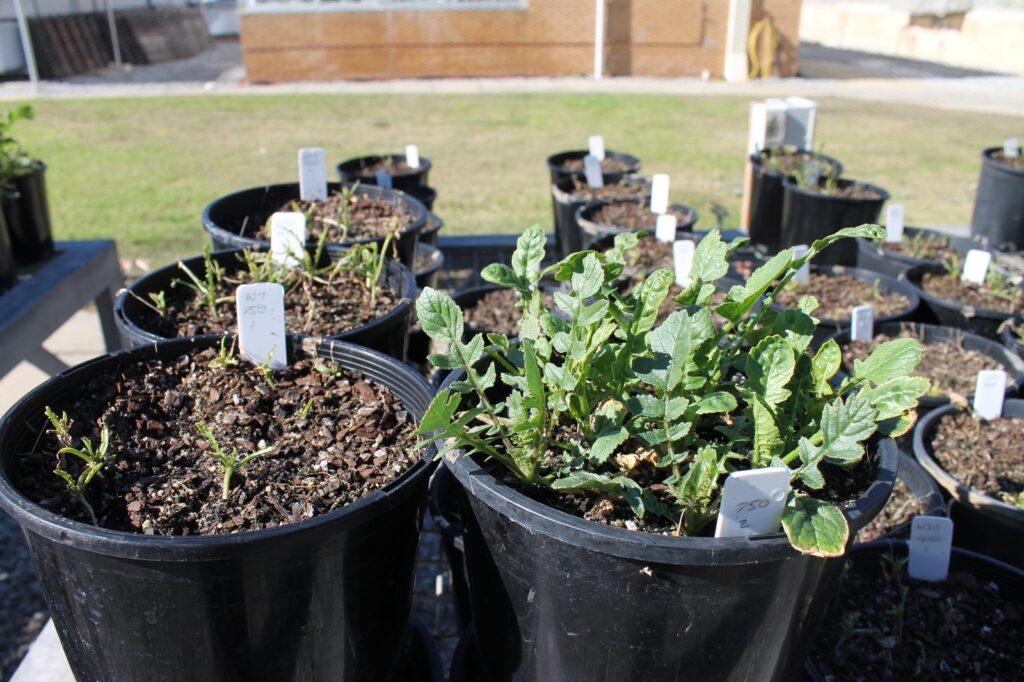
How were they found?
Mike Ashworth started his PhD at AHRI, based at UWA almost three years ago and decided to focus on glyphosate resistant wild radish. This was a big risk, what if he didn’t find any? Wouldn’t make much of a PhD!
Mike found two populations (WARR 37 & WARR 38) in the northern wheatbelt, one he discovered while driving along the road and the other was discovered by an agronomist. Both of these were in winter chemical fallow situations where wild radish appeared to have survived an application of glyphosate.
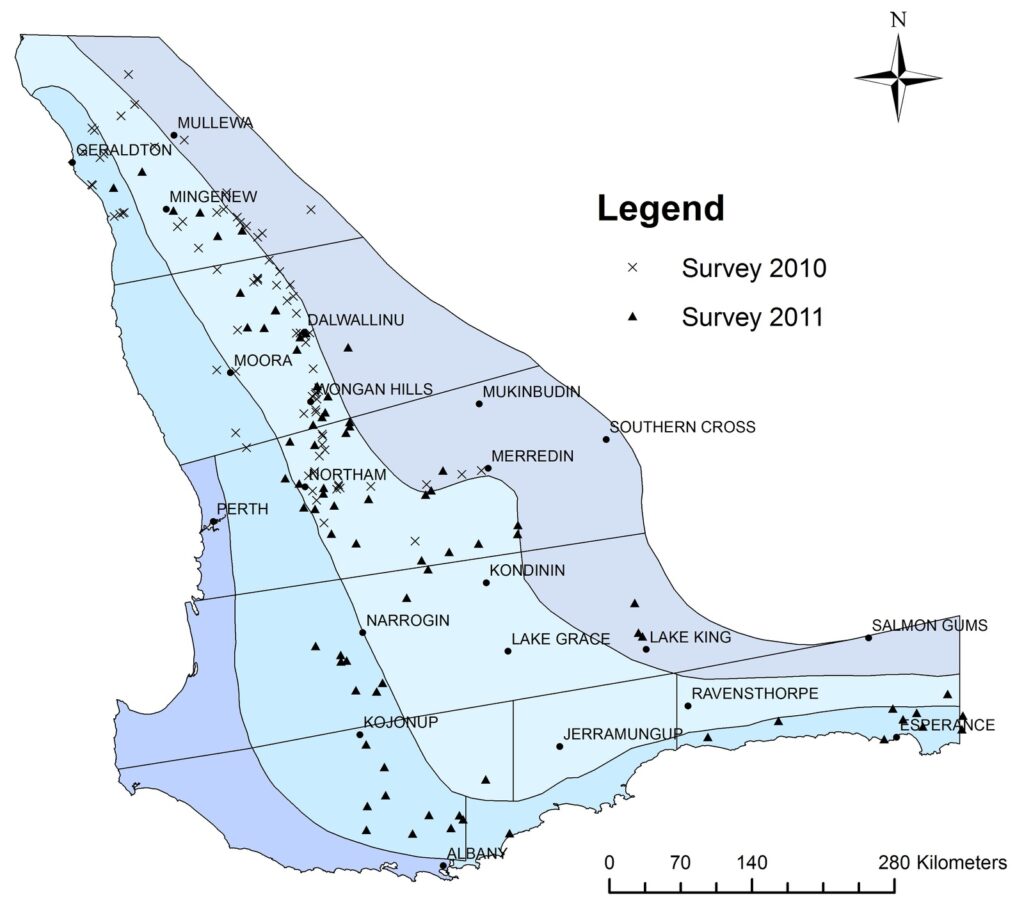
To find the third population, Mike hit the road in 2010 and 2011 surveying 239 paddocks from the first ever WA plantings of glyphosate tolerant canola. For all of this effort he found one more population of glyphosate resistant wild radish.
How resistant are they?
Keep in mind that all of this research was conducted on two leaf wild radish plants growing in pots in ideal conditions and sprayed in ideal conditions in a spray cabinet.

WARR 37
WARR is an acronym used by AHRI to describe populations of wild radish. WARR stands for Western Australian Raphanus raphanistrum.
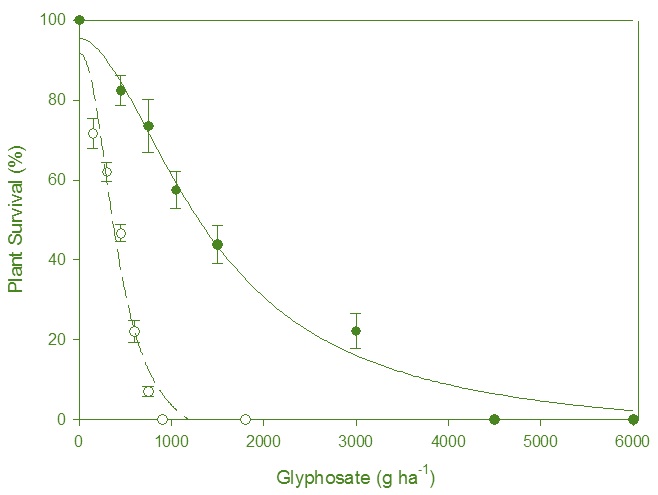
This population had 22% of plants survive 6.25 L/ha glyphosate 480.

WARR 38
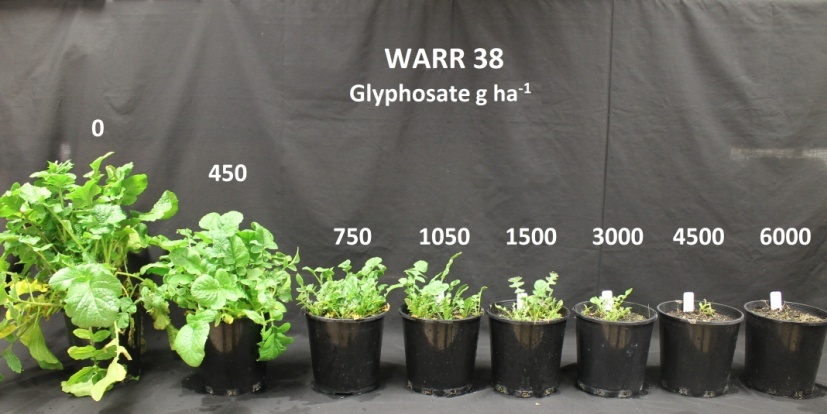
This population had 35% of plants survive 6.25 L/ha glyphosate and 8% of plants survived 12.5 L/ha glyphosate 480.

Population 3
Data of the third population of wild radish that was discovered in glyphosate tolerant canola is not shown here. This population had 3 fold resistance to glyphosate (similar level of resistance to the WARR 37 population).
These populations have many survivors at a rate that was once commercially viable which is of great concern. Further exposure of glyphosate to these populations is likely to select for the most resistant plants.
Rate
The pictures above show that the higher rates of glyphosate did suppress the growth of the resistant populations. This is potentially a weakness that we can exploit by growing competitive crops and using herbicide mixtures and rotation. We are yet to describe the resistance mechanism of these populations. This is an area for future research that will help to determine the best course of management of glyphosate resistant wild radish.
What next?
The usual story applies. We need to continue to use a diverse range of weed control tactics including herbicide and non-herbicide weed control. The discovery of these populations makes this more important than ever. Crop competition and harvest weed seed control will be very important tools to manage wild radish in the future as well as other non-herbicide tools that suit various farming systems.
If growers or agronomists see a failure with glyphosate when targeting wild radish in the field they should not assume that it was due to the conditions or application. Have it tested and know where you stand.
Follow the link below for further information:
- Scientific paper: (Michael Ashworth)
- Website: ScienceNetwork ‘sight set on resilient weed’

Posted in: Uncategorised