


Publications
Get the latest on leading weeds research
Working across a wide area of crop weed research, AHRI has produced a number of publications. View the latest publications below, or search with the filter.
Featured Publication
Search Publications
Keyword
Category
Date Range
Interactions between crop sequences, weed populations and herbicide use in Western Australian broadacre farms: findings of a six-year survey

Six years of survey data taken from 184 paddocks spanning 14 million ha of land used for crop and pasture production in south-west western Australia were used to assess weed populations, herbicide resistance, integrated weed management (IWM) actions and herbicide use patterns in a dryland agricultural system. Key findings were that weed density within crops was low, with 72% of cropping paddocks containing fewer than 10 grass weeds/m2 at anthesis.
StMADS11 Subfamily Gene PfMADS16 From Polypogon fugax Regulates Early Flowering and Seed Development
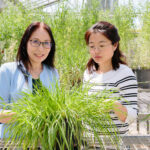
The evolution of herbicide resistance in weedy plants leads to various adaptation traits including flowering time and seed germination.
Quizalofop-p-ethyl resistance in Polypogon fugax involves glutathione S-transferases
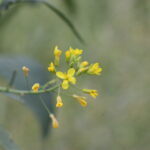
Asiaminor bluegrass (Polypogon fugax) is one of the main weeds invading Chinese canola fields.
Cinmethylin controls multiple herbicide resistant Lolium rigidum and its wheat selectivity is P450-based

Cinmethylin is a new (old) herbicide being commercialised by BASF that is pre-emergent selective in wheat. Cinmethylin has been shown to be an inhibitor of acyl ACP thioesterase (Campe et al 2018).
Evolution of resistance to HPPD-inhibiting herbicides in a wild radish population via enhanced herbicide metabolism

Herbicides that inhibit HPPD have become very important. In North America, corn-selective HPPD herbicides have long been used and cases of HPPD herbicide-resistant weeds reported.
Non-target site resistance to PDS-inhibiting herbicides in a wild radish Raphanus raphanistrum population

The paper “Non-target site resistance to PDS-inhibiting herbicides in a wild radish Raphanus raphanistrum population” is the work of AHRI PhD student Huan Lu.
Get access to short and sharp insights into the world of more crop, fewer weeds with AHRI Insight.
Subscribe Now