


Publications
Get the latest on leading weeds research
Working across a wide area of crop weed research, AHRI has produced a number of publications. View the latest publications below, or search with the filter.
Featured Publication
Search Publications
Keyword
Category
Date Range
Identity and Activity of 2,4-Dichlorophenoxyacetic Acid Metabolites in Wild Radish (Raphanus raphanistrum)

Synthetic auxin herbicides, such as 2,4-dichlorophenoxyacetic acid (2,4-D), are widely used for selective control of broadleaf weeds in cereals and transgenic crops.
Rainfall affects leaching of pre-emergent herbicide from wheat residue into the soil

No-tillage with stubble retention is a widely used cropping system for its conservation and yield benefits. The no-tillage farming system in southern Australia relies heavily on herbicides for weed management, but heavy crop residues may have a negative impact on the activity of pre-emergent herbicides applied.
Metribuzin Resistance in a Wild Radish (Raphanus raphanistrum) Population via Both psbA Gene Mutation and Enhanced Metabolism

This paper identifies multiple mechanisms: as well as psbA gene mutation there is a non-target site resistance mechanism of enhanced metabolism. Of course, we expect multiple mechanisms of herbicide resistance as evident here in both target site psbA gene mutation and non-target site enhanced metabolism resistance.
A novel psbA mutation (Phe274–Val) confers resistance to PSII herbicides in wild radish (Raphanus raphanistrum)
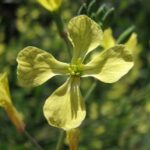
Wild radish (Raphanus raphanistrum) is a globally important weed of crops. Two atrazine-resistant wild radish populations (R1 and R2), collected from the Western Australia grain belt, were investigated for resistance to photosystem II (PSII) herbicides.
Effect of crop residues on interception and activity of prosulfocarb, pyroxasulfone, and trifluralin

Crop residue retention on the soil surface in the no-tillage system can intercept pre-emergent herbicides and reduce their efficacy. Three experiments were conducted to investigate the effect of crop residue amount (0, 1, 2 and 4 t ha–1), moisture (wet versus dry), type (wheat, barley, canola, chickpea and lupin) and age (fresh or aged for one year) on the interception and subsequent leaching of prosulfocarb, pyroxasulfone, and trifluralin from the residue into soil.
Influence of Crop Competition and Harvest Weed Seed Control on Rigid Ryegrass (Lolium rigidum) Seed Retention Height in Wheat Crop Canopies

The obvious evolutionary reality is that persistent use of harvest weed seed control (HWSC) is a selection pressure for any mechanisms enabling L. rigidum seed to avoid HWSC. For example, seed shatters before grain harvest or a greater percentage of retained seed at a height below that at which the crop is cut in the harvesting operation.
Get access to short and sharp insights into the world of more crop, fewer weeds with AHRI Insight.
Subscribe Now