


Publications
Get the latest on leading weeds research
Working across a wide area of crop weed research, AHRI has produced a number of publications. View the latest publications below, or search with the filter.
Featured Publication
Search Publications
Keyword
Category
Date Range
How do spatial heterogeneity and dispersal in weed population models affect predictions of herbicide resistance evolution?

Weed population simulations can be useful to predict the effects of alternative management practices on herbicide resistance (HR) evolution. Almost all previous simulations have ignored the possibility ofwithin-field spatial structure in a weed population, instead making the implicit assumption of perfectdispersal and spatial homogeneity in population density and genetics. The effects of this simplifying assumption have not been examined, despite the fact that dispersal limitations and spatial structure within the population are likely to occur and to affect the evolution of resistance. Therefore, we developed a new spatially-explicit model called SOMER. Click through for more.
High Levels of Adoption Indicate That Harvest Weed Seed Control Is Now an Established Weed Control Practice in Australian Cropping
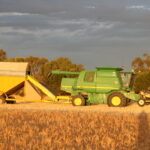
Not so long ago, harvest weed seed control (HWSC) was only used by a minority of early adopting grain growers. Now it has gone mainstream and pretty soon just about everyone will be doing it.
This is the result from a national Australian GRDC grower survey reported in a recent scientific publication by Michael Walsh from University of Sydney. Every few years GRDC fund a large grower practices telephone survey. The most recent survey was conducted by CSIRO in 2014, and they collaborated with Michael to design the HWSC questions.
Harvest Weed Seed Control Systems are Similarly Effective on Rigid Ryegrass
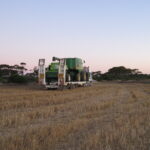
Our latest published paper is Harvest Weed Seed Control Systems are Similarly Effective on Rigid Ryegrass by Michael Walsh, Charlotte Aves & Stephen Powles. This field research led by Michael Walsh was in itself a major logistics task. AHRI purchased, with GRDC support, a John Deere combine grain harvester, which was transported across the nation from west to east at wheat harvest time.
Inheritance of 2,4-D resistance traits in multiple herbicide-resistant Raphanus raphanistrum populations
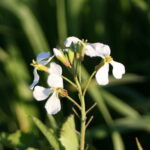
Arelatively low number of weed species have evolved resistance to auxinic herbicides despite their use for almost 70 years. This inheritance study with two Raphanus raphanistrum populations multiple-resistant 2,4-D and the ALS-inhibiting herbicide chlorsulfuron determined the number of genes and genetic dominance of 2,4-D resistance and investigated the association between traits conferring resistance to the two herbicide modes of action. Levels of 2,4-D phenotypic resistance and resistance segregation patterns were assessed in parental populations, F1 and F2 families.
Characterisation of glufosinate resistance mechanisms in Eleusine indica

An Eleusine indica population has evolved resistance to glufosinate, a major post-emergence herbicide of global agriculture. This population was analysed for target-site (glutamine synthetase) and non-target-site (glufosinate uptake, translocation and metabolism) resistance mechanisms.
Can herbicide safeners allow selective control of weedy rice infesting rice crops?
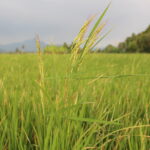
Rice is a major field crop of paramount importance for global food security. However, the increased adoption of more profitable and resource-efficient direct-seeded rice (DSR) systems has contributed to greater weed infestations, including weedy rice, which has become a severe problem in several Asian regions. In this study we have developed a conceptually novel method to protect rice plants at high doses of clomazone and triallate.
Get access to short and sharp insights into the world of more crop, fewer weeds with AHRI Insight.
Subscribe Now