


Publications
Get the latest on leading weeds research
Working across a wide area of crop weed research, AHRI has produced a number of publications. View the latest publications below, or search with the filter.
Featured Publication
Search Publications
Keyword
Category
Date Range
A novel mutation in SoIAA20 confers cross-resistance to 2,4-Dichlorophenoxyacetic acid and other auxinic herbicides in Sonchus oleraceus

The paired deletion flanking the degron region of SoIAA20 likely provides resistance to 2,4-D by restricting the movement of 2,4-D from the treated tissue to the rest of the plant.
Characterisation of low-level pyrasulfotole resistance and the role of herbicide translocation in wild radish (Raphanus raphanistrum)

Previous studies have shown a wide range of 2,4-D translocation phenotypes in resistant populations of the agricultural weed Raphanus raphanistrum, but it was hypothesised that enhanced movement out of the apical meristem could contribute to resistance.
Patterns of herbicide resistance in Raphanus raphanistrum revealed by comprehensive testing and statistical analysis
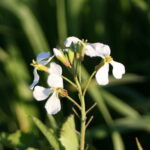
Raphanus raphanistrum causes $40 million total revenue losses annually in Western Australia partly due to its historically-documented ability to evolve herbicide resistance to multiple modes…
Focus on the Crop Not the Weed: Canola Identification for Precision Weed Management Using Deep Learning

This paper uses deep learning to explore a novel approach via targeted segmentation mapping of crop plants rather than weeds, focusing on canola (Brassica napus) as the target crop.
Distribution, frequency and molecular basis of clethodim and quizalofop resistance in brome grass (Bromus diandrus)

The identification of target-site-based herbicide resistance in another polyploid weed species provides an opportunity for closer examination of how rapidly resistance evolves in these species under field conditions.
Early silique-shedding wild radish (Raphanus raphanistrum L.) phenotypes persist in a long-term harvest weed seed control managed field in Western Australia

This study introduces a wild radish population collected from Yelbeni in the Western Australian grainbelt that evolved an early silique abscission (shedding) trait to persist despite long-term harvest weed seed control (HWSC) use.
Get access to short and sharp insights into the world of more crop, fewer weeds with AHRI Insight.
Subscribe Now