


Publications
Get the latest on leading weeds research
Working across a wide area of crop weed research, AHRI has produced a number of publications. View the latest publications below, or search with the filter.
Featured Publication
Search Publications
Keyword
Category
Date Range
Increased carrier volume improves pre-emergence control of Lolium rigidum in zero-tillage seeding systems

With the ever-increasing evolution of resistance to post-emergent herbicides there is in several parts of the world an increase in pre-emergent herbicide use.
Identification of Genetic Elements Associated with EPSPS Gene Amplification
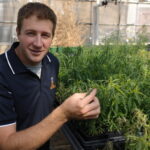
Weed populations can have high genetic plasticity and rapid responses to environmental selection pressures. For example, 100-fold amplification of the 5-enolpyruvylshikimate-3-phosphate synthase (EPSPS) gene evolved in the weed species Amaranthus palmeri to confer resistance to glyphosate, the world’s most important herbicide.
Herbicide resistance-endowing ACCase gene mutations in hexaploid wild oat (Avena fatua): insights into resistance evolution in a hexaploid species

Many herbicide-resistant weed species are polyploids, but far too little about the evolution of resistance mutations in polyploids is understood. Hexaploid wild oat (Avena fatua) is a global crop weed and many populations have evolved herbicide resistance.
Herbicide Resistance Endowed by Enhanced Rates of Herbicide Metabolism in Wild Oat (Avena spp.)
The biochemical basis of resistance to the acetyl-coenzyme A carboxylase (ACCase)-inhibiting herbicide diclofop-methyl was investigated in a resistant wild oat population (R1), which does not exhibit a resistant ACCase.
Glyphosate resistance in Sorghum halepense and Lolium rigidum is reduced at suboptimal growing temperatures

In a large cropping area of northern Argentina, Sorghum halepense (Johnsongrass) has evolved towards glyphosate resistance. This study aimed to determine the molecular and biochemical basis conferring glyphosate resistance in this species. Experiments were conducted to assess target EPSPS gene sequences and 14C-glyphosate leaf absorption and translocation to meristematic tissues.
Evolved polygenic herbicide resistance in Lolium rigidum by low-dose herbicide selection within standing genetic variation

The interaction between environment and genetic traits under selection is the basis of evolution. In this study, we have investigated the genetic basis of herbicide resistance in a highly characterized initially herbicide-susceptible Lolium rigidum population recurrently selected with low (below recommended label) doses of the herbicide diclofop-methyl.
Get access to short and sharp insights into the world of more crop, fewer weeds with AHRI Insight.
Subscribe Now