


Publications
Get the latest on leading weeds research
Working across a wide area of crop weed research, AHRI has produced a number of publications. View the latest publications below, or search with the filter.
Featured Publication
Search Publications
Keyword
Category
Date Range
Assessing the Capability and Potential of LiDAR for Weed Detection

In this study, the capability of Light Detection and Ranging (LiDAR) sensors were assessed to detect and locate weeds. For this purpose, two trials were performed using artificial targets (representing weeds) at different heights and diameter to understand the detection limits of a LiDAR.
Herbicide resistance: the increasingly important role of the crop protection

A significant number of research and development personnel in crop protection companies are taking a leading role in both fundamental and applied herbicide resistance RDE nationally and globally. In this editorial AHRI Director Hugh Beckie explores this topic, with responses from some key crop protection companies including Syngenta, Corteva Agriscience, FMC and Valent.
Mechanistic basis for synergism of 2,4-D amine and metribuzin in Avena sterilis

In this study, researchers showed a synergistic effect of the auxin herbicide 2,4-D amine with the PSII-inhibiting herbicide metribuzin to control the global grass weed wild oat (Avena sterilis) population and investigated the underlying mechanisms.
The adaptive value of flowering time in wild radish (Raphanus raphanistrum)

This paper demonstrates that an early flowering time adaptation does not come at a growth cost when in competition with wheat. Flowering time however did result in an increasing number of flowers being located below the harvest cutting height. As the early flowering wild radish does not come at a competitive cost, it needs to be managed through diversity in both management tactic and timing.
Identification of the first glyphosate-resistant capeweed (Arctotheca calendula) population
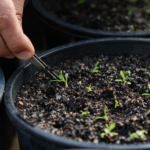
This is the first confirmation of glyphosate resistance evolution in a capeweed population globally. With capeweed resistance already confirmed to photosystem-I inhibiting herbicides (paraquat and diquat), this study emphasizes the importance of using integrated measures that do not depend only on the use of non-selective herbicides for controlling herbicide resistance-prone capeweed populations.
Cytochrome P450 CYP81A10v7 in Lolium rigidum confers metabolic resistance to herbicides across at least five modes of action

AHRI researchers have show in this report that a single P450 gene in a cross-pollinated weed species L. rigidum confers resistance to herbicides of at least five modes of action across seven herbicide chemistries.
Get access to short and sharp insights into the world of more crop, fewer weeds with AHRI Insight.
Subscribe Now