


Publications
Get the latest on leading weeds research
Working across a wide area of crop weed research, AHRI has produced a number of publications. View the latest publications below, or search with the filter.
Featured Publication
Search Publications
Keyword
Category
Date Range
Loss of trifluralin metabolic resistance in Lolium rigidum plants exposed to prosulfocarb recurrent selection

This study provides evidence that trait(s) enabling efficient trifluralin metabolism in Lolium rigidum are purged from the population under prosulfocarb recurrent selection.
It is speculated that survival to prosulfocarb via a lack of metabolic herbicide activation, and survival to trifluralin conferred by enhanced herbicide metabolism, are mutually exclusive.
Lessons learnt: crop-seed cleaning reduces weed-seed contamination in Western Australian grain samples
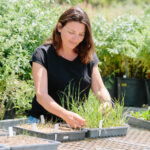
In this work AHRI researcher Dr. Mechelle Owen surveyed and quantified weed seed infestation of the crop seed that farmers would be planting. In Australia, farmers save their own crop seed (wheat, barley, pulse crops, non-hyrbid canola) for planting in the subsequent growing season. Farmers produce their saved crop seed on low weed burden crop fields, so as to minimise weed seed contamination. This survey was done in 2015. This is the third AHRI survey, with the first conducted in 1998 (Powles & Cawthray 1999) and a larger second survey in 2009 (Michael, Owen & Powles 2010). In this third survey in 2015, Mechelle Owen surveyed 81 crop seed samples, each of 10 kg crop seed (wheat, barley, canola, lupins).
Plasma membrane receptor-like kinases and transporters are associated with 2,4-D resistance in wild radish

Resistance to the synthetic auxin 2,4-dichlorophenoxyacetic acid (2,4-D) in wild radish (Raphanus raphanistrum) appears to be due to a complex, multifaceted mechanism possibly involving enhanced constitutive plant defence and alterations in auxin signalling. Based on a previous gene expression analysis highlighting the plasma membrane as being important for 2,4-D resistance, this study aimed to identify the components of the leaf plasma membrane proteome that contribute to resistance. Key results included: two receptor-like kinases of unknown function (L-type lectin domain-containing receptor kinase IV.1-like and At1g51820-like) and the ATP-binding cassette transporter ABCB19, an auxin efflux transporter, were identified as being associated with auxinic herbicide resistance.
Metribuzin resistance via enhanced metabolism in a multiple herbicide resistant Lolium rigidum population

Most Australian crop farm populations of the grass weed Lolium rigidum are multiple herbicide-resistant. Most resistant populations exhibit target site mutations (e.g. ACCase, ALS), as well as metabolic resistance due to cytochrome P450, catalysed by enhanced rates of herbicide metabolism.
DK‐RIM: Assisting Integrated Management of Lolium multiflorum, Italian Ryegrass

The bio‐economic decision support system, DK‐RIM (Denmark‐Ryegrass Integrated Management), was developed to assist integrated management of L. multiflorum in Danish cropping systems, based on the Australian RIM model. Find out more about this latest publication.
Herbicide Resistance in Plants

Herbicide resistance in weeds is perhaps the most prominent research area within the discipline of weed science today. Incidence, management challenges, and the cost of multiple-resistant weed populations are continually increasing worldwide.
Get access to short and sharp insights into the world of more crop, fewer weeds with AHRI Insight.
Subscribe Now